Hide And Go Seek
California’s Consumer Privacy Act (CCPA) grants people in the state greater autonomy over how their data is used and monetized. State residents can opt out of their data being used for advertising.
In theory, anyway.
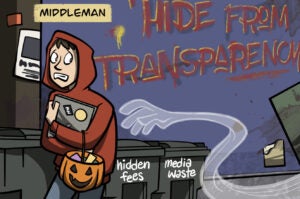
At least 35 of the nearly 500 data brokers registered in California hid their own deletion instructions from Google, making it nearly impossible for individuals to request that their data be deleted.
The brokers embedded code on their websites to prevent certain pages (such as those with instructions for deleting one’s data) from indexing for search results, according to reporting from The Markup and Wired.

It is technically a legal move since most of the brokers that buried their opt-out pages at least have those pages and adhere to requests, says Matthew Schwartz, policy analyst at Consumer Reports.
However, if businesses make it unduly onerous for consumers to exercise their rights, they could be violating CCPA, says Tom Kemp, executive director of the California Privacy agency.
Five of the pages listed in the California registry weren’t just omitted from search; they linked to pages that didn’t exist at all, with the URLs taking the users to error pages.
Catch A Spark
One of the hottest ad types right now is boosting creator content on social media.
Right now, the tactic, dubbed “partnership ads,” is primarily relegated to Meta, Digiday reports. TikTok is eager to push its “spark ads” campaigns, and YouTube also has its version of these ads. But Facebookagram owns the mental mindshare of advertisers.
“A lot of brands are like, ‘Meta, Meta, Meta,’” says Lily Comba, CEO of the influencer agency Superbloom. “It’s what they understand, it’s what’s working – and YouTube is incredibly bewildering to media buyers, and can be very expensive.”
It’s no surprise that advertisers are boosting creator posts to break through the promotional clutter. Discretely paying to generate the appearance of virality or increased engagement with the post is valuable in itself, like movie studios that want to recreate the idea of word of mouth.
The partnership or spark ads clock as organic and native to people’s feeds. And the platforms tout the authenticity that comes from boosting something “organic.” But really it’s just a different way for advertisers to load creative on the platform.
Perplexing Offer
Perplexity submitted a $34.5 billion bid to acquire Chrome from Google, The Wall Street Journal reports.
We hear you. Nobody asked for Chrome offers, and the browser, one of Google’s crown jewels, is decidedly not for sale.
The bid is more of a symbolic gesture. US District Judge Amit Mehta is weighing the potential remedies in regard to Google’s illegal search monopoly, per his ruling from last year. One possibility, although the Journal reports it’s unlikely, is a forced divestiture of Chrome.
In submitting a large bid (though $34.5 billion is a steal for a majority share of global web traffic), Perplexity proves there’s a market and viable spinoff options for divisions of Google.
A challenge with Google divestiture, which is also true of the publisher ad tech antitrust trial, is that Chrome or Google’s third-party ad tech is too big for outside competitors to swallow, aside from, like, Microsoft (and then you have the same antitrust problem).
Perplexity currently operates Comet, a browser nobody uses, and is on pace to earn nearly $100 million this year. To somehow have Chrome fall into its lap would be a historic coup.
But Wait! There’s More!
Online publishers are more attuned to audience engagement than ever. [AdMonsters]
For all the controversy, American Eagle’s Sydney Sweeney ad hasn’t meaningfully driven sales yet. [Adweek]
Disney and Fox plan to offer their ESPN and Fox One streaming services, which both launch on August 21, together as a bundle. [Variety]
The “Buy American” movement is losing steam among American consumers. [Axios]
How ChatGPT-5’s rocky rollout resembles the trajectory of a live-service game update. [Kotaku]
IAB Tech Lab created new taxonomy guidance, which is now open for public comment. [release]
Thanks for reading AdExchanger’s Daily News Roundup. Want it by email? Sign up here.