On Wednesday, Bluefish, an AI marketing platform that helps advertisers understand and refine how they’re showing up in AI queries, announced $20 million in series A funding.
The round, which brings Bluefish’s total funding to $24 million, was led by NEA and Salesforce Ventures.

It’s worth pointing out that the word “bluefish” is also the name of a real fish, which poses an obvious challenge for anyone trying to Google the company.
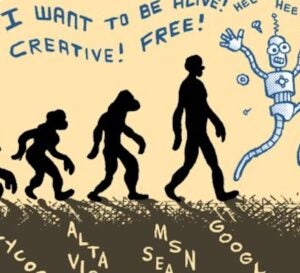
Good thing Bluefish (capital “B”) is focusing on generative engine optimization (GEO), not SEO.
Nice and niche
A lot of AI marketing platforms are trying to be everything for everyone, the company’s CEO Alex Sherman told AdExchanger. But that isn’t Bluefish’s goal.
Bluefish was developed “exclusively to support the Fortune 500,” said Sherman, who was CEO and co-founder of the now-defunct retail media platform PromoteIQ, which he sold to Microsoft in 2019. Today, 80% of Bluefish’s customers are Fortune 500 brands, including Adidas and Tishman Speyer.
The new funding will go toward expanding Bluefish’s product suite and hiring, with a focus on its client-facing and engineering teams.
Bluefish helps marketers in three major areas, according to Sherman: tracking their performance across leading AI systems like ChatGPT, optimizing performance by generating and rearranging content and measuring the impact of optimizations.
The company’s measurement tool analyzes how often and how favorably a brand shows up in an LLM’s search results and how effective a brand’s own content is at influencing the way that AI models describe it.
Reaching an audience effectively isn’t just about flooding the web with content, Sherman said, although many brands are inclined to do just that. An excess of low-quality content is “wildly unacceptable,” he said, but tempting because it’s easy to produce.
Instead, Bluefish urges brands to generate a smaller quantity of higher-quality, targeted content so they can understand “not just how their brand is being portrayed,” Sherman said, “but why it’s being portrayed that way.”
The new SEO
In what Sherman referred to as “traditional search algorithms,” i.e., SEO, an advertiser’s goal is to determine their “credibility and relevance to a particular keyword,” which ultimately determines where on the results page they show up.
But large-language models are solving for a new problem.
They’re trying to generate a “long-form qualitative description” of a product in response to a longer-form query, Sherman said, making them “much more content hungry” than traditional search algorithms.
And that’s where brands face challenges.
Because their websites were primarily designed for humans and traditional search algorithms to consume, Sherman said, brands now need to redesign their sites to appeal to LLMs, too.
The more (data), the merrier
But there isn’t a universal or perfect way to appeal to an LLM, said Sherman.
Rather, he said, certain commonalities emerge that are consistent across LLMs, which all brands can take advantage of, like the fact that most LLMs tend to seek out information from third-party sites, such as Reddit and blogs.
Those sites generally have “a lot more content” than a brand’s own website, he explained, and LLMs are looking for larger repositories of content. With that in mind, brands are still figuring out the best ways to get seen or, rather, ingested.
Bluefish acts as a “compass,” Sherman said, guiding its clients toward the specific platforms and types of data they should focus on to fill in the gaps in their marketing with the sort of data an LLM looks for.
If, for instance, a prospective customer is shopping for an athletic shoe that’s good for someone with lower back issues, just having one’s brand show up in the query results isn’t necessarily enough to convince a customer to buy their product. But a brand can use Bluefish to determine whether it has enough available content across the web to answer a customer’s follow-up questions, like the shoe’s dimensions and how, exactly, it aids back support. If that information isn’t out there, the brand can produce it.
Brands still haven’t unlocked the best practices for GEO, but as AI marketing continues to evolve, Sherman predicts that advertisers will start focusing more on how their products are perceived by AI.
“Over the next few years,” he said, every large brand will need to further develop its “enterprise marketing infrastructure in order to reach and engage consumers in this new AI funnel.”
This story has been updated to correct the funding total.