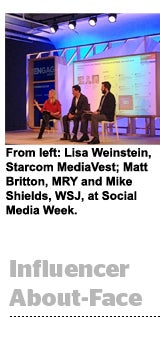
 Depending on how you frame it, Facebook, YouTube, Twitter and Pinterest are either disintermediating the influencer marketing ecosystem or “wrapping their arms more tightly around it,” as Lisa Weinstein, president of global digital, data and analytics at Starcom MediaVest Group, puts it.
Circa 2011, brands threw money at social marketing agencies with one goal: “Go viral.” But consumer platforms have exerted greater control over their audiences of late, disrupting intermediaries.
The most prominent example is Facebook, which largely replaced organic reach with paid media distribution for brand and individual pages.
But other platforms are doing it too: YouTube is selling high-touch sponsorships (or access to premium content via its ad tech), bypassing the multichannel networks that once served as the primary brokers between brand sponsors and video creators.
Pinterest has begun policing affiliate partners who make money from its prominent users. And Twitter will acquire Niche, a provider of tools geared to content creators.
For Matt Britton, founder of the now Publicis-owned social media marketing agency MRY (formerly called Mr Youth), these moves are not surprising.

“Facebook is shifting the way agencies work,” Britton said at a Wednesday panel at Social Media Week in New York. “We’re seeing a crunch from ad tech companies, publishers, [even] other agencies. There used to be a PR, social, mobile agency – they’re all going to need to consolidate. … Brands are using ad tech vs. agencies to distribute content now.”
As social media’s free ride sputters, agencies have responded in part by looking to publishers to help break through in ways that agencies’ and brands’ in-house content development efforts fail to do.
“We don’t compete with VICE, but many [publishers and platforms] are saying, ‘We’ll give you the creative for free if you buy our media.’ VICE and BuzzFeed can say, ‘We know our audience better than anyone – let’s create content together,’” said Britton.
This might be for the best. “What brand’s webisode have you ever watched?” he added.
SMG’s Weinstein struck a similar chord. “Brands were creating all of this original content, but now there’s this tendency where they have the content, but it’s not getting distributed at any meaningful scale,” she said. “We’re now saying, ‘It’s about identifying the right content brands can leverage to connect with consumers.’”