
The Agentic Marketplace Is Here. Where Does That Leave DSPs and SSPs?
Swivel and Olyzon’s new partnership brings buy-side and sell-side agents together as early examples of an agentic marketplace.

Swivel and Olyzon’s new partnership brings buy-side and sell-side agents together as early examples of an agentic marketplace.
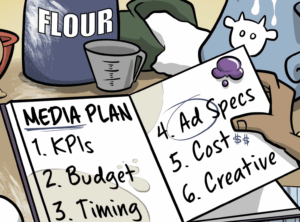
A new solution from Basis puts campaign planning into the (figurative) hands of AI agents. But it’s just a starting point.
The Trade Desk overhauls ID partner payments; investors downplay their software holdings; and Kalshi’s “we don’t do death markets” campaign may be backfiring.
An upcoming paper from CIMM doesn’t just demonstrate that differences in media quality can be measured. It also argues that tying media value to short-term outcomes has perpetuated longstanding industry challenges.

In 2011, three media devices captured 87% of consumer attention. Today, that figure has dropped to 65%, according to McKinsey. The fragmentation isn’t slowing down; it’s accelerating. Streaming services, social media, podcasts and gaming now compete for eyeballs, making traditional media planning feel like navigating with an outdated map.

Now that we have not one but two reporters covering the CTV advertising space, we thought we’d try something different and share the roundup newsletter this week!

If you want to protect your margins, your data and your long-term strategy, here are five questions worth asking before you sign anything.

AdMarketplace’s new chief product officer, Sam Cox, wants to rethink how ads fit into AI chat and search – without losing user trust.

Netflix’s MLB streaming is heavy on the ads; the anti-AI movement gains traction; the court dismissed X’s antitrust allegations.

The NewFronts, digital video’s week of splashy sales pitches, is in full swing. Our reporters share what they learned on the ground. Plus: What can ad tech learn from Data, a new off-Broadway play?
The Guardian US grew its programmatic revenue by 44% year over year in February. The lift came from higher effective CPMs across both the open exchange and private marketplace deals.
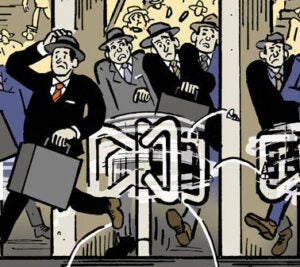
Samsung teases a shoppable TV integration with Amazon; hackers target AI search users for marketing account takeovers; and new research shows young news audiences are “social-first.”

Brave’s chief of ads Jean-Paul Schmetz on competition in the search and browser markets, the fallout from the Google Search antitrust ruling and whether AI search will help smaller upstarts compete with Big Tech.

Judge tosses Helena World Chronicle case against Google; Apple will introduce ads to Maps; EU broadcasters push DMA “gatekeeper” label for Big Tech in CTV.

The FBI wants your data; Agency-owned AI platforms may not be long for this world; and how much data is too much, anyway?

If a buyer wants real control, “domain rationalization” alone will never be enough. Buyers need “bid rationalization,” shaping the supply at the bid-request level so they see fewer, better, more outcome-relevant opportunities.

Marketers debate whether to build or buy their tools; Meta is shutting down the VR version of Horizon Worlds; and influencer marketing strives for authenticity.

Ad agency holding companies are among the most adaptable businesses out there. In recent years holdcos like Publicis, WPP and Omnicom-IPG have stretched our notions of what an agency business even is exactly.
Audience preferences are constantly evolving. So why not ads that evolve in real time, too? No, really.
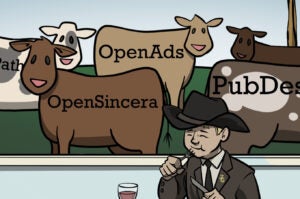
Publicis recommends some clients ditch The Trade Desk; ChatGPT reconsiders its “unlimited” enterprise subscription; and how NYC’s Washington Square Park became an influencer hub.

Complexity hasn’t made the CTV supply chain difficult to trust. This is a transparency problem and, more specifically, an ads.txt problem.

Viant reported its Q4 and full-year 2025 earnings on Wednesday evening and investors appeared pleased.
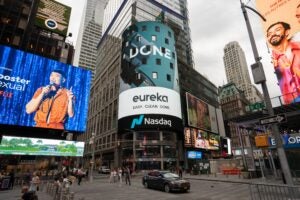
The deal is an example of OOH platforms building sales infrastructure that interoperates with agency workflows. It’s also an example of DSPs going direct to publishers.
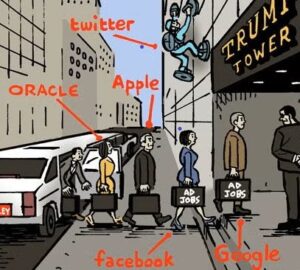
Jeff Green doubles down on OpenPath’s value; Amazon wants Perplexity to disable agentic shopping; and the creator economy takes on political fundraising.

Amazon’s Fire TV redesign is extra friendly for ads; Anthropic benefits from its newfound spine; and the children yearn for the malls.
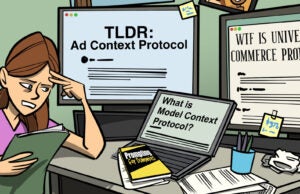
Your TL;DR on MCP, the open standard that lets AI models connect to tools, remember context and run workflows across platforms.

Mega’s software tools aim to take some of the work out of the user’s hands by automating brand’s strategy development, execution and reporting.

The NHL develops new revenue streams; malware makes its way into the programmatic ecosystem; and Target plans to open 30 new locations this year, along with revamping existing ones.

It can be hard to measure the effect of advertising on in-person sales. Men’s Wearhouse partnered with measurement agency Ovative to see what was working.

Netflix unveils a conversion API; some publishers are using AI tools to expand their footprints; and CFOs are getting more involved in marketing decisions.

AdExchanger Senior Editors Alyssa Boyle and Anthony Vargas share their takeaways from three days chatting about agentic AI at POSSIBLE.

Generative AI search has pushed traffic off a cliff across most of the internet, but not on social platforms. Reddit included.

Domenic Venuto, indie agency Horizon Media’s chief product and data officer, sat down with AdExchanger during POSSIBLE at the Fontainebleau in Miami to unpack the role of AI in today’s media and advertising landscape.

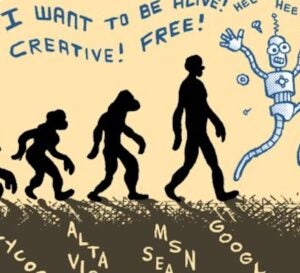
Google announced new features and ad types for AI Max, its AI-based bidding product for search and shopping or sponsored product ads. The company also touted “hundreds of thousands” of advertisers using AI Max.

Meta’s Q1 call sounded like an AI and hardware pitch, but under the hood it was still about one thing: investing in AI to squeeze more money out of its ads business.
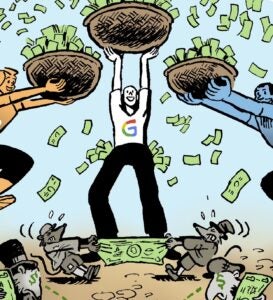
Alphabet earned $109.9 billion in Q1 this year, up from $90.2 billion a year ago. And that’s not even the truly gobsmacking number.