Brand safety has been broken for a long time.
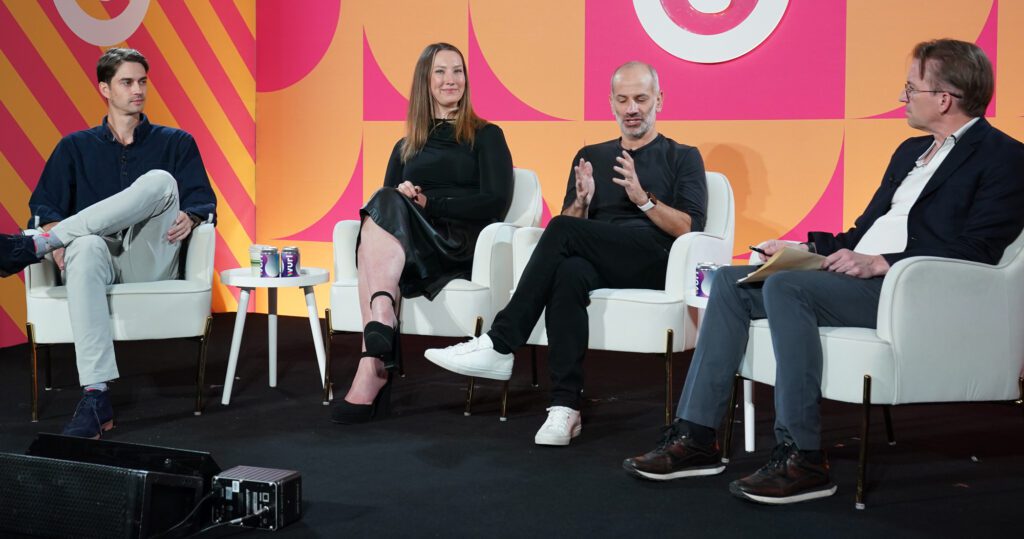
Kieran Geyer, a paid media manager at insurance company Prudential, is still having a lot of the same brand-safety problems today as he did years ago, he said last week during a panel at Advertising Week in New York City.
And it’s pretty damned frustrating.
Depending on the campaign, a brand might experience “exorbitantly high block rates,” Geyer said, while “still showing up in unequivocally brand unsafe environments that no brand would want to appear next to.”
In other words, the worst of both worlds.

Overblocking and missed opportunities
Meanwhile, “positive” targeting, like contextual – as in, actively targeting certain placements rather than just steering clear of unsafe ones – can sometimes “feel like a black box to media buyers,” Geyer said.
It’s not always clear, for example, how the tech is working, where ads are landing or, “probably most importantly,” he said, “why did I land there?”
On the flip side, despite research to the contrary, many brands still nervously avoid certain media environments – hard news in particular – because they’re worried about negative associations.
Meagan Myers, VP of programmatic strategy and partnerships at Fox Corporation, has experienced this dynamic firsthand. Some brands think it’s simply “easier” and less risky to bluntly block an entire category or publisher, she said.
And although brand safety and suitability tech is evolving beyond keywords, blocklists are still being used by verification providers, which often leads to overblocking and missed opportunities.
Take the death of anthropologist Jane Goodall several weeks ago. Her obituaries were a celebration of a long life well lived. But “archaic blocking methods” might glom onto the word “death” and make that inventory unavailable to monetize, Myers said.
“However, it’s not a negative sentiment,” she said, “There’s still a place for an advertiser there that I think could be incredibly impactful.”
Beyond keywords
Last week, Fox announced a partnership with Mobian, the AI-powered contextual advertising startup founded in 2023 by Jonah Goodhart of Moat fame.
Moat, which was acquired by Oracle in 2017 (and shut down by Oracle in 2024) used machine learning to measure and analyze digital ad performance, including viewability, brand safety, ad fraud and audience attention metrics.
Mobian, born in a different era, uses generative AI to scan a publisher’s content – including text, video, audio and images – to understand the context, themes, sentiment and
what Goodhart called its “essence.” The approach combines multiple AI models so the tech isn’t overly dependent on any given one, he said.
“AI can do a really good job of understanding content,” Goodhart said, “and we’ve built a way to do it at scale.”
Fox used Mobian to scan the inventory across all of its properties and found that the vast majority is either associated with a positive or a neutral sentiment and would fit into categories most advertisers consider brand safe.
“There’s something broken in the ad tech ecosystem when we see professional publishers with 30% to 50% of their content marked as high risk according to the legacy brand safety providers,” Myers said. “That’s a real, fundamental problem, because it’s high-quality content with huge audiences.”
Beyond audience demos
And high-quality content with huge audiences is what advertisers should gravitate toward, because that’s what helps drive outcomes.
A brand’s reputation and values are critically important, Goodhart said, and they need to be part of any media buying strategy, but, “at the end of the day, we want to drive business results.”
After scanning and classifying a publisher’s content, Mobian creates dynamic audience profiles called AI personas that continuously update based on real-time signals, including behavior, sentiment and purchase intent.
Rather than relying on demographics, Fox has started using these AI personas within OneFOX, its AI media buying platform, to match viewers with relevant, brand safe moments depending on what’s available right then.
“Audience targeting is great, but let’s talk about the content, right?” Myers said. “We’re looking at brand safety and brand suitability as more of a flexible thing that we can work with, because what’s brand safe isn’t always brand suitable, but now we can make what’s brand suitable always be brand safe.”