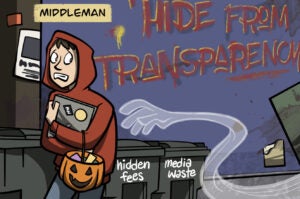
Last month, the New York Times published a story revealing that many big brands found themselves advertising on YouTube channels that support racist falsehoods.
The falsehoods in question related to stories about Haitian migrants in Ohio “eating ducks on the side of the road” or abducting and eating pets. That these falsehoods once dominated election coverage suggests there’s no longer a bar for what is considered reliable news.
The misinformation won’t stop when the election is over. Bad actors will continue to try and monetize misleading and inflammatory content long after the votes are counted. This, unfortunately, is what has become of our media ecosystem.
Just as consumers struggle with online misinformation, so, too, do brands.

Google has taken steps to address misinformation and has been removing content that violates its policies. But YouTube cannot always effectively judge misinformation from opinion, nor should it decide which news source is reliable or unreliable. There are too many gray areas.
Unfortunately, there will always be some media that contains misinformation. That’s as true for YouTube as it is for every other platform, and it isn’t changing any time soon.
What is a brand to do? There are really only two options:
Avoid news altogether
Some brands are choosing to block all news, and it’s an unfortunate choice.
Reliable news is needed more than ever. And when brands avoid news as a category, they are taking funding away from real journalists.
Avoiding news entirely is a bad strategy on YouTube in particular. The platform’s news content attracts valuable audiences, and it’s a top driver of advertising results for many verticals and brands.
On YouTube, news content drives 24% to 44% better audience engagement than the average non-news category, according to Pixability’s analysis. Omitting news is choosing to not reach your audience while they’re consuming content they care about.
Support reliable news
Instead of blocking all news, there are ways brands can support news sources that have proven to be reliable in their reporting. Organizations like Ad Fontes Media and NewsGuard are tackling this problem by rating news sources both in terms of reliability and political bias.
Here’s one major tell brands can use to identify news that’s worth avoiding: Some major “news” outlets admit to being a source of opinion, rather than news. Opinion content is prone to bias and conjecture.
Even when dealing with reputable news sources, brands have concerns beyond misinformation. Brands may want to steer clear of topics that are highly sensitive – like a school shooting, a devastating storm or a military conflict.
But don’t let this content scare you away from all news. Brand suitability solutions can let you set strict parameters for what you want to avoid.
Even when brands choose to buy the news, there are other things to consider.
On YouTube, misinformation doesn’t only come from news content. It can be spread by creators who focus on other topics. And it’s not always deliberate. Creators are just as susceptible to being misinformed by unreliable sources as anyone else.
Simply put, avoiding all news is not a silver bullet.
Perfection is the enemy of good. In an effort to create marketplaces that are 100% free of news content, advertisers are doing more harm than good. They’re reaching a smaller portion of their desired audience and taking resources away from reliable publishers.
While nothing in marketing is perfect, there are better options out there than blocking all news. Brands can do a lot of good for both themselves and journalism by choosing to support real news in a responsible way – just when we need it most.
“On TV & Video” is a column exploring opportunities and challenges in advanced TV and video.
Follow Pixability and AdExchanger on LinkedIn.