
DSPlease
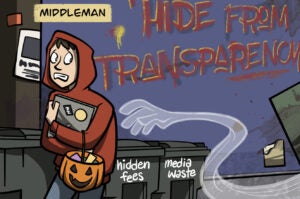
Brand marketers and agency buyers are skeptical of DSPs’ transparency claims.
After Publicis announced last month that it’s no longer recommending The Trade Desk to its clients, other DSPs saw an opportunity to strike.
Since then, other DSPs (Viant being “the most aggressive,” according to one media buyer) have been reaching out to TTD clients and touting their transparency standards and openness to an audit in the hopes of shifting spend or getting a bakeoff.
But most buyers, according to Digiday, “aren’t buying it.”

CMOs “don’t really care” how their tech partners run their businesses, Roy Ben Ezra, SVP of client services at RTBHouse, tells Digiday. They only care about seeing results.
On the B2B marketing side, StackAdapt, Tatari, Ilumin and Quantcast are among the agency and ad tech companies targeting marketers on LinkedIn with ads that differentiate their platforms from TTD.
Despite the hullabaloo, buyers aren’t much persuaded. After all, they’re spending most of their ad money through Big Tech platforms known for being black boxes.
DSPs are treating Publicis’ announcement as “the topic du jour,” says Justin Scarborough, head of programmatic at media agency Crossmedia. But media buyers haven’t shifted spend an iota.
Full-Court Acquisition
Speaking of Publicis Groupe, the agency is getting off the acquisition bench, buying WME Group’s 160over90 agency, Ad Age reports.
The deal adds 670 employees to Publicis Sport’s 80-person team.
“This is a key pillar of our investment in sports,” says Publicis CEO Arthur Sadoun. And Publicis is following a banner year where it invested $500 million in its sports verticals, including acquisitions of Adopts and Bespoke Sports & Entertainment.
Sports media spans many agency services. It can also connect those to services to data-driven advertising.
For example, Publicis Sports CEO Suzy Deering says 160over90 offers full-service capabilities, such as PR, experiential marketing, branded content and sponsorship evaluations. Plus, Publicis plans to build a “fan graph” on top of Epsilon’s identity data, which will link audiences, sponsorships, media and athlete partnerships into a single system to measure outcomes.
Of course, since every 2026 headline needs an AI angle, the sports audience data flowing through Epsilon and its ad-buying groups provides an outlet to use AI.
“Generative AI will allow us to connect the data with the content to truly be addressable and measurable,” Sadoun says. How that looks in practice still remains a mystery.
Dis-Credited
Ad platforms are closing the credit card loophole.
This newsletter has covered how, in recent months, rumors circulated, crystallized and then became the officially acknowledged policy that Meta will no longer accept credit card payments for ad campaigns.
That’s no big deal for big brand marketers or most agencies. The Trade Desk doesn’t take credit cards, either, nor do broadcasters.
But DTC founder-marketer types, social ad-buying consultants and boutique social agencies often put the bill on a credit card, thus earning cashback or loyalty rewards and boosting their credit card status. It was an undiscussed aspect of platform advertising, and its relative covertness is a sign of how much advertisers love (loved) this particular loophole.
Meta follows Google, which phased out advertiser credit card payments last year.
Then, last Friday, Amazon Ads alerted customers that, as of April 15, manual credit card payments will no longer be accepted. Advertisers will have to link a bank account.
Giving less than two weeks notice is a tough pill to swallow. Though Amazon is offering $2,500 in ad credits, per some advertisers’ memos, at least, to soften the impact.
Or hold out hope for a little while longer. Meta delayed its credit card policy change from April 1 to May 1.
But Wait! There’s More!
Nota scraps its network of AI-generated local news sites after they were caught plagiarizing small publishers. [Poynter]
Several publishers cite double-digit CPM growth using The Trade Desk’s OpenPath. [Digiday]
OpenAI acquires tech podcast TBPN. [The Information]
Romance novel publisher Harlequin signed a multiyear agreement with AI entertainment company Dashverse to produce AI-generated microdramas based on its IP. [Publishers Weekly]
Fidji Simo takes a medical leave from OpenAI as company prepares for expected IPO. [WSJ]